
Business model, B2B and social
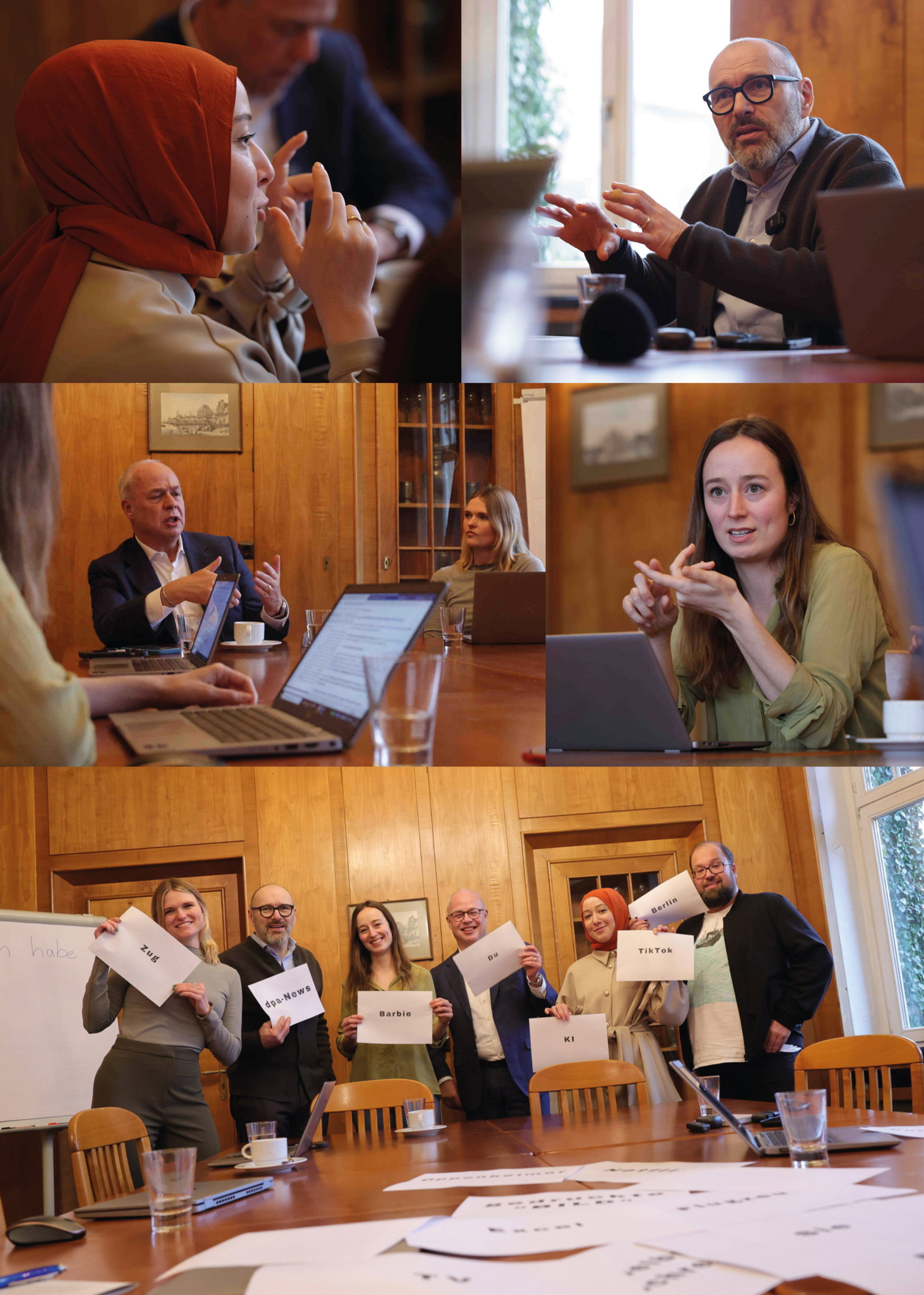
Ann-Marie: I was wondering why we don’t have our own social media department.
Peter: Well, what would be the business model behind that? We have to take a very radical approach to ensuring that our business models actually work. At the moment, as dpa, social media would only work for us as a B2B model. That would mean that I have to offer my customers something that they can make a viable business with. I always say: If we make products, they should have the potential to generate a million in sales within three years. And I don’t really see that with social media at the moment.
 Ann-Marie: I worked on a test project in the digital editorial department: B2B social content. And that went really well. But I think you need more resources to implement it.
Peter: I’m very excited. That’s a topic we’ve been experimenting with. That was with a total of three test customers, and now we’re listening to their reactions. The next test will be the willingness to pay. I believe that we are on the right track here.
Hilal: At AI, we said in April 2023: Dear colleagues, please come to us if you have any ideas. But the AI training courses have only just started. Shouldn’t this lab situation have been made possible earlier?
Peter: We have three types when it comes to organisations in the dpa group: The pioneers, who are good at trial and error. The city builders, who are good at fixed structures that always have to work. And in between are the settlers, who already have quite good structures, but they can also try things out. AI will leave relatively few things as they are. That means we have to face up to the issue. It’s a challenge to bring this into an organisation that still has to function without paralysing it.
Benedikt: Does it sometimes get on your nerves that we only have B2B business?
Sven: I knew what I was getting into. It also gives us a certain degree of freedom. Over the last 10 or 15 years, the agency has transformed a lot into this laboratory situation. When we do something together with clients, we also have a shared product experience. This can either be frustrating or produce a sense of achievement. Of course, the only thing we would always like is faster feedback. That’s why video is such a fascinating element for us. In television, we are relatively sure that if it was on the morning show, it reached 1.1 million people.
Peter: The next five years will be major years of transformation in the media landscape. Hopefully, many models will switch from traditional forms of distribution to a digital form – hopefully with a good outcome in the end, so that journalism can continue to fund itself. It will require an increased level of cooperation at various levels. And dpa must play an active enabler role here.
There are two things that dpa has to look at when it comes to customers, and unfortunately this is relatively brutal. Where can we make more sales with our products and where can we have lower costs? The greater the swings on both sides, the more necessary dpa will be. And the better we will be able to fulfil our purpose of providing reliable, balanced, independent information in the future.
Benedikt: Thank you all very much. I think this has been a very stimulating conversation. And I look forward to repeating it next year for our 76th anniversary!